


Men's Mental Health Month · Southfield, MI
November: Savings for Daylight, but not your Drive.
Keep your Edge, starting with a 30-second check.
Give him time with a physician who listens.
A $200 introductory TMS visit, as a gift. He decides whether to use it, and his visit stays private between him and his doctor.
-
Door A · Insurance
Check my coverage
About 30 seconds. Three questions about your plan and your history. If it looks worth it, we verify with your plan.
Check my coverage -
Door B · Skip insurance
$200 introductory TMS visit, cash only
Physician evaluation plus your first TMS session, when TMS is appropriate for you.
Self-pay, cash only, not billed to insurance. No guarantee of results.
Skip insurance
Thinking of someone else? Gift him a visit
For partners and adult kids
How the gift works
- What the gift is
The $200 introductory TMS visit: a physician evaluation, plus his first TMS session if Dr. Jagtap finds it safe and appropriate. It isn't a treatment course, and it isn't a promise of any result.
- He chooses
He decides whether to use it. He books it himself and gives his own consent.
- The doctor decides on fit
Clinical fit is decided by Dr. Jagtap after an evaluation. If TMS isn't safe or suitable for him, no session is given.
- If TMS isn't the right fit
If TMS isn't the right fit, our team will talk with you about your options.
- Privacy
His visit stays private between him and his doctor. You won't receive health updates unless he chooses to share them.
- Off-label note
TMS is FDA-cleared for depression (MDD) and OCD. An introductory session for other goals, such as Attention or Brain Fitness, is off-label.
- How it's paid
Self-pay, cash only, not billed to insurance. One per person.
You'll share only your name, email, and phone, plus his first name. Please don't send us health details about him.
Door A · About 30 seconds
TMS coverage check
What kind of health plan do you have?
Pick the closest match.
How many depression medications have you tried?
Count any you took for depression, even briefly.
Has a clinician ever diagnosed you with depression?
A doctor, nurse practitioner, or therapist.
Worth a benefits check. We verify with your plan.
Plans usually look for a depression diagnosis and a history of prior treatment before they cover TMS. From your answers, it's worth asking. We check the details with your plan and call you back.
This check is not a diagnosis and not a coverage decision. Only your plan can confirm coverage.
I recommend a benefits check with your plan, and a TMS evaluation. The evaluation is where we decide whether TMS fits.
The cash visit may be simpler.
Coverage usually needs a depression diagnosis and prior treatments. Without both, a plan may not cover TMS yet, so the $200 cash visit may be the simpler first step.
You can still ask. We're glad to check with your plan.
This check is not a diagnosis and not a coverage decision. Only your plan can confirm coverage.
I recommend the $200 cash TMS visit as the simpler start. We'll decide at the evaluation whether TMS is the right fit.
Without a plan to check, the cash visit is the simpler path.
If you're not sure what plan you have, we can help you find out. Or skip insurance entirely with the $200 introductory visit.
This check is not a diagnosis and not a coverage decision. Only your plan can confirm coverage.
I recommend the $200 cash TMS visit as the simplest place to begin. If you later find a plan, we can still look at benefits, and the evaluation is where we decide whether TMS fits.
Medicare: please call us.
For Medicare and Medicare Advantage, we go over your options by phone.
I recommend you call us so we can talk through a TMS visit and what that would look like for you. Only the evaluation decides whether TMS fits.
Your answers stay on this device. They aren't sent to us, saved, or tracked. No name needed.
Door B · Introductory self-pay rate
$200
Physician evaluation plus your first TMS session, when TMS is appropriate for you.
Self-pay, cash only, not billed to insurance. No guarantee of results. The evaluation decides whether TMS fits. See details.
Get my follow-up codeThe idea behind the video
Light, a brake, and a circuit
-

The light lever
Morning light is free.
About 15 minutes outside soon after sunrise, while the sun is still low. In the evening, keep lights warm and dim after 8 pm.
-
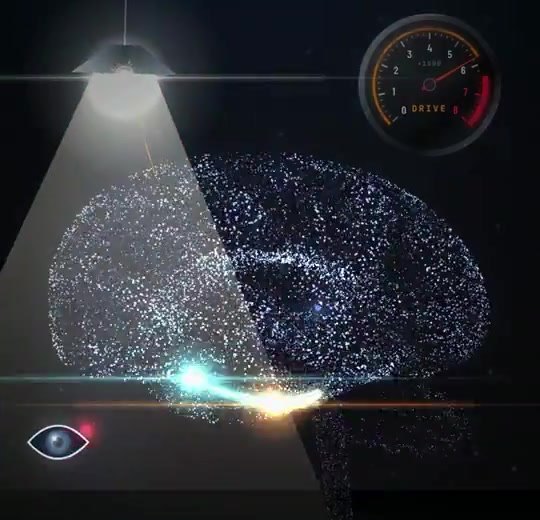
The brake
Bright light late at night works against reward.
In mice, light at night reached the brain's reward system through a small relay next to the habenula, a region that acts like a brake on reward, and led to depression-like behavior.
An K et al., Nat Neurosci 2020 (mice). PMID 32483349.
-
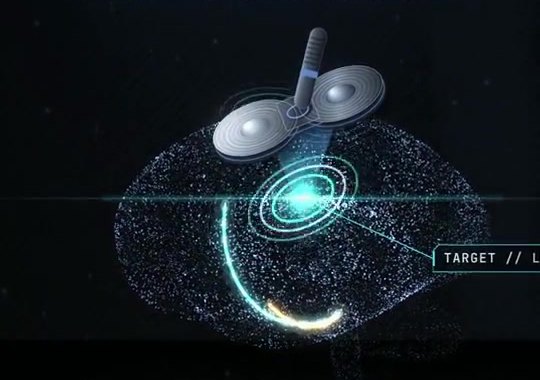
The circuit
When stress has worn the circuit down, light may not be enough.
TMS sends focused magnetic pulses to the left prefrontal cortex, session after session. In a brain-scan study of 8 healthy adults, stimulating this area released dopamine in the caudate, a deeper region.
Strafella AP et al., J Neurosci 2001. PMID 11459878.


If the slump has lasted two weeks or more, or the things you used to enjoy have gone flat, it may be depression. Depression is treatable, and it's worth talking to a doctor about.
What a session is like
You stay awake
You sit in a chair and stay awake the whole time.
A light tapping
Most people feel a light tapping on the scalp. Some have mild scalp soreness or a headache early on.
Short sessions
Some protocols take about 11 minutes.
Drive yourself home
Most people drive themselves home afterward.
What we can't promise
We can't promise TMS will bring your drive back, or that one visit will change how you feel.We can't promise TMS will bring his drive back, or that one visit will change how he feels. TMS isn't right for everyone. The evaluation decides whether it fits, and results vary.
TMS is FDA-cleared for depression (MDD) and OCD. An introductory session for other goals, such as Attention or Brain Fitness, is off-label. Sources and details.
The Paradigm approach
Here, you're the CEO of your health.Here, he's the CEO of his health.

You set the goals: energy, focus, sleep, drive. They're tracked next to the standard rating scales, over time.
You decide the next step, and you decide what counts as progress.
He sets the goals, he makes the choices, and his visit stays between him and his doctor.
Your part is simpler and just as important: be in his corner, and keep the door open.

I'm Dr. Jagtap, a board-certified psychiatrist.
I run these TMS protocols myself, here in Southfield.
After an evaluation, I choose the protocol, target, and dose for each person.
For partners and adult kids
Gift him a visit.
Sometimes the first step comes from someone in his corner. You can give the $200 introductory TMS visit as a gift. He decides whether to use it.
You'll share only your name, email, and phone, plus his first name. Please don't send us health details about him.
How it works
1Fill in the short form to get your code.
2Call or email us with it within 15 minutes.
3We call you back. No obligation.
Next step
Request a benefits check
Leave your details and answer four quick safety questions. We check TMS benefits with your plan and call you back. Your code appears right away.
Gift him a visit
Tell us who you are and his first name. Your code appears right away. Call us with it and we'll set up the gift.
His visit stays private between him and his doctor.
Paradigm Psychiatry25899 W 12 Mile Rd Ste 320
Southfield, MI 48034
947-209-5202
Details and fine print
The $200 visit
Introductory self-pay rate: $200 for your physician evaluation and first TMS session, when TMS is appropriate for you. There is no separate evaluation charge. This rate covers the evaluation and one first session, not a full treatment course. If the evaluation shows TMS is not a fit, no TMS session is given. Self-pay, cash only, not billed to insurance. One per person.
The coverage check
The three questions on this page run only in your browser. Your answers are not sent to us, saved, or tracked, and this page has no analytics or ad pixels. The result is general information, not a diagnosis and not a coverage decision. Plans set their own rules for TMS, and only your plan can confirm coverage. If you request a benefits check, our team verifies with your plan and calls you back.
Giving the visit as a gift
The gift is the $200 introductory TMS visit only: a physician evaluation, plus a first TMS session if Dr. Jagtap finds it safe and appropriate. It is not a treatment course and not a promise of any result. The person receiving it chooses whether to use it, books it himself, and gives his own consent. Clinical fit is decided by Dr. Jagtap after an evaluation. If TMS isn't the right fit, our team will talk with you about your options. His visit stays private between him and his doctor; the giver receives no health information unless he authorizes it. The gift form asks only for the giver's name, email, and phone, and his first name.
Your follow-up code
When you submit the form, this page shows a code shaped like PP-XXXX-XXXX. Your code is valid for 15 minutes. Call 947-209-5202 and leave a no-obligation voicemail, or email it to info@paradigm-psychiatry.com. If a code expires, you can request a new one or still call.
The research
Light at night: An K et al., Nature Neuroscience, 2020. In mice, light exposure at night produced depression-like behavior through a pathway from light-sensing cells in the eye to the dorsal perihabenular nucleus and on to the nucleus accumbens, part of the reward system. This is an animal study.
Dopamine: Strafella AP, Paus T, Barrett J, Dagher A, Journal of Neuroscience, 2001;21(15):RC157. In 8 healthy adults, repetitive TMS of the left dorsolateral prefrontal cortex, measured with PET brain scans, led to dopamine release in the left caudate nucleus compared with stimulation of a control site. This is a brain-scan measure in healthy volunteers, not a symptom measure.
Paradigm's protocol may differ from the protocols in these studies. None of these findings predicts what any one visit will do for any one person.
What a session is like
You stay awake. Most people feel a light tapping on the scalp. Some have mild scalp soreness or a headache early on. Most people drive themselves home. Some protocols take about 11 minutes.
Safety questions
A yes answer does not block you. You still get a code, and your request is flagged so Dr. Jagtap can review it first. Please call 947-209-5202. These questions are not a medical clearance. Candidacy is decided only at the physician evaluation.
Important
No guarantee of results. TMS is not right for everyone, and the evaluation decides whether it fits you. TMS is FDA-cleared for major depressive disorder (MDD) and OCD. Attention and Brain Fitness uses are off-label. Educational information only, not medical advice. Individual results vary. Do not stop or change psychiatric or other medication without your clinician. If you're thinking about suicide or in crisis, call or text 988, or call 911.